
July 27, 2023
Irrigation Planning in 4 Steps
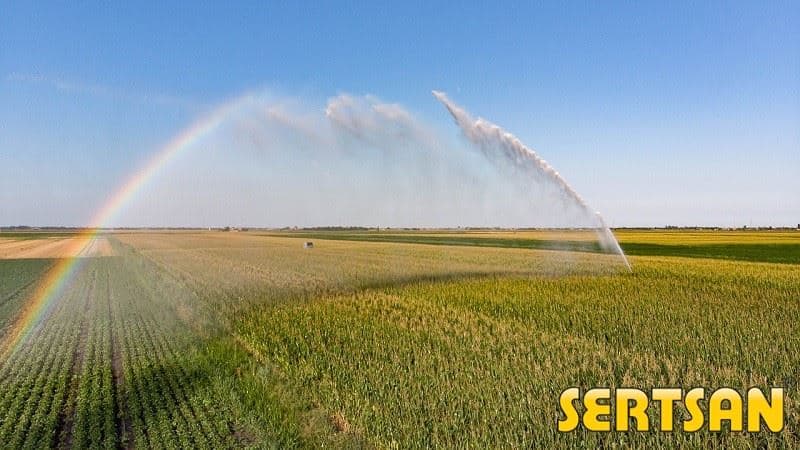
Implementing an irrigation system on agricultural land requires considerable planning and investment. Therefore, before purchasing and installing an irrigation system, you need to prepare an irrigation plan for your land. Irrigation planning can serve as insurance against insufficient rainfall and crop stress.
What is irrigation planning?
In general terms, planning refers to the set of operations and decisions that make it possible to meet the water and irrigation needs of the planted crop with the available facilities and water resources, without the crop suffering from water shortage.
Stages of irrigation planning
* Investigating the irrigability of the land and soil
* Checking the quantity and quality of the available water
* Selecting the right irrigation method and checking the availability of labor, equipment, and energy
* Examining the economic aspects
First step: checking the irrigability of the land and soil
Not every type of soil and land can be irrigated and cultivated, due to problems such as the shape of the terrain (the presence of steep slopes), low permeability, or poor drainage that leads to salt accumulation.
In general, all soil types can be classified into three broad categories.
1- Irrigable soils
These are soils that have no restrictions on water intake, thanks to their suitable texture and the ideal shape of the land surface.
2- Soils irrigable under certain conditions
These soils have limitations for proper irrigation due to the presence of impermeable layers, high salinity potential, steep slopes, and similar factors. Some of these lands can be improved with proper drainage. What matters under such conditions is to examine the land carefully before planting and irrigating.
3- Non-irrigable soils
Soils of this kind have serious limitations in terms of water absorption and successful irrigation, and they have practically lost their capacity for cultivation.
What are the components of soil texture?
In general, soil texture indicates the percentage of the mineral fraction of the soil — that is, its sand, silt, and clay components.
The combination of these three fractions shapes the soil of agricultural land. The particles that make up the soil form larger units that we call aggregates. Aggregates stick together and form clods. There are pores between the particles, aggregates, and clods. These pores can be large or small, and how they are distributed is very important.
In another classification, soils can be divided into three categories:
Light soil
The composition of these soils is such that more than 80% is sand and less than 12% is clay. In general, these soils have high absorption capacity but low storage capacity. For this reason, they will not have adequate fertility. Light soil is also known as warm soil.
Medium soil
Soils with a clay content between 12% and 28% are classified as medium soils. This group of soils is suitable in terms of fertility, as they have sufficient absorption capacity as well as high storage capacity.
Heavy soil
In this group of soils, the clay content exceeds 28%; they have high storage capacity and provide the plant with good moisture. The main problem with this group is the lack of soil pores that would allow the crop to breathe.
Soils with different compositions do not have the same capacity to retain water and nutrients. For example, in a light soil, just 15% moisture may be sufficient for the crop to flower, whereas in a medium or heavy soil the same moisture percentage is not enough for the plant to survive. Water collects around and within the pores. The plant first absorbs water from the large pores; then, when that water is exhausted, the large pores are fed by the small ones.
Soil texture affects irrigation planning in two ways:
1- Soil texture determines the soil's capacity and its permeability rate (the rate at which the soil accepts water). Before designing the irrigation system, you should gather sufficient information about the soil texture, because it affects the water flow and the spacing between sprinklers and drippers.
2- Knowing the structure of the soil means knowing the following: How much water is there in the root zone? What is the soil's water-holding capacity? How much water is available to the roots? This makes it easier to calculate the water requirement and the irrigation amount, and prevents the plant from being subjected to water stress.
Different states of soil texture during irrigation
Soil can be in three general states during irrigation:
Saturation
The soil is said to be saturated when all of its pores are filled with water.
Field capacity
This is the state in which the soil has taken in the maximum amount of water it can accept. Field capacity is the most ideal condition for crop growth. Water availability refers to the difference between field capacity and the wilting point. Reaching field capacity is essential, as it provides sufficient moisture and air for the roots.
Wilting point
This is the state in which the plant loses its ability to absorb water from the soil due to a lack of sufficient moisture.
In the figure above, you can see the difference between the three states: saturation, field capacity, and wilting point. The best condition for growing and cultivating crops is the field capacity state, in which the water requirement is met and there is also enough space for the roots to breathe.
Soil salinity
Salinity refers to the presence of salt in water and in agricultural soil. Salt occurs naturally in soil, surface water, and groundwater. The most common salt causing salinity in water and soil is sodium chloride, but other substances such as magnesium, calcium, and potassium can also cause it. The higher the soil salinity, the harder it becomes for the plant to take up water from the soil, and the crop reaches the wilting point.
Soil pH
Soil pH refers to the acidity or alkalinity of the soil. Under normal conditions, soil pH ranges from 1 to 14; within this range, 7 is neutral, below 7 is acidic, and above 7 is alkaline. The presence of certain compounds can change the alkalinity or acidity of the soil. pH is considered the main variable for controlling chemical processes in the soil. In fact, through a control process, pH determines the standard acidity or alkalinity range for growing crops. For most plants, the optimum pH range is between 5.5 and 7. However, there are many plants that can grow and reproduce outside this range.
A deep loamy soil with proper drainage — with groundwater 1.5 to 2 meters below the soil surface, aeration of 10-12%, and a water-holding capacity of 15% (15 cm of water per meter of soil depth), regarded as optimum soil — is considered suitable for irrigation and cultivation. Using the drip irrigation method makes it much easier to transport nutrients and to establish an acid-alkali balance in the soil. Although improving the poor physical properties of cultivated soil is difficult and is regarded as a limitation on crop growth, with the drip irrigation method you will be able to solve these problems by precisely controlling the irrigation amount.
Soil analysis
To determine the properties and texture of the existing soil and then select the irrigation method suited to the land and the crop, the spacing of the pipes, the intensity of the flow, and so on, the soil must be analyzed. For soil analysis, samples are taken from the agricultural land with the help of two 10-liter buckets, a shovel, and a soil auger.
Soil sampling methods and steps
* Move across the diagonal of the land and take soil samples every 50 to 100 meters, depending on the size of the plot.
* Two samples should be taken from each sampling point (one from a depth of 30 cm and the other from a depth of 60 cm).
* All samples taken from a depth of 30 cm should be placed in one bucket, and the samples taken from a depth of 60 cm in a separate bucket.
* After sampling, mix the contents of each bucket thoroughly.
* Take 1.5 kg of the mixture from each bucket, place it in separate bags, and indicate the sampling depth of each with a label.
* Deliver the samples to an accredited and certified laboratory.
Main indicators in soil analysis
* Mechanical composition of the soil
* Soil salinity and pH
* NPK (nitrogen, phosphorus, and potassium)
* Calcium
* Magnesium
A wide range of soil analyses is available that you can request from the laboratory when needed. As for the sampling depth, sampling can continue down to a depth of two meters and be carried out in three stages.
Second step: determining the quantity and quality of the water needed
In irrigation, water is the heart of any irrigation system. Calculating and monitoring the required amount of water is one of the most fundamental factors that can help you succeed with your irrigation system and, ultimately, grow your crops properly. To make sure the water is suitable for agriculture, you can seek help from specialized water laboratories operating in this field. Examining the compatibility of the soil type with the water is important, as it determines what will be used in irrigation.
Water budgeting
The purpose of water budgeting is to keep soil moisture at an optimum level in order to replace the water consumed by the crop. The amount of water used by the crop is also referred to as the evapotranspiration (ET) rate. The amount of water used varies according to the plant's growth stage and the weather. Plants generally consume more water in hot and dry conditions. Wind and clouds can also affect the evapotranspiration rate.
The water budgeting method for irrigation is relatively simple. However, separate planning must be carried out for each stage of plant development. The most important consideration in an efficient schedule and optimal budgeting is meeting the crop's water requirement with the available water resources. The evapotranspiration rate can be obtained from the data of the regional meteorological center. That said, the amount of evapotranspiration (ET) depends on factors such as temperature, intensity of sunlight, relative air humidity, wind speed, and so on.
Third step: checking the availability of power and irrigation equipment
Power source
If electricity is available, the priority is to make use of this energy source. Fundamentally, electric power has advantages over diesel engines. Among the most important advantages of this form of energy are lower pumping costs, more economical maintenance, greater reliability, and ease of operation.
Equipment
The irrigation system (pumps, filtration station, pipelines, irrigation equipment, etc.) should be selected according to your irrigation needs. When purchasing this equipment, attention must be paid to the cultivated area, the shape of the land, labor requirements, the power source, the required operating pressure, and similar considerations. One of the most important points in selecting an irrigation system is crop rotation over the production years. Procuring and installing irrigation equipment is usually very costly for farmers. Therefore, it is recommended to review all aspects before preparation and implementation.
Visit other farmers' irrigation systems and benefit from their experience, examine the advantages and disadvantages of different irrigation systems, and preferably buy from the companies' authorized sales representatives. As far as possible, purchase all equipment of the same brand and from authorized dealers. This largely eliminates the problems involved in installing and operating the irrigation system.
Pump power
The pressure of the water pump must be suited to the land and the needs of the irrigation system. When purchasing, pay attention to the diameter of the pipes, the wall thickness, the permissible operating pressure, and so on.
Fourth step: examining the economic aspects
Before planting crops, you should determine which combination will give you the highest yield. Will a single crop or multiple crops deliver the highest yield? To answer this important question, you should investigate and research topics such as the product market, the selling price of the crop, the possibility of exporting and importing, and the costs of cultivation and harvesting. When selecting crop combinations, the feasibility of planting should also be assessed, to ensure that the planting combination is suitable in terms of the available facilities and labor.