
February 23, 2023
Dripper Number and Spacing in Drip Irrigation
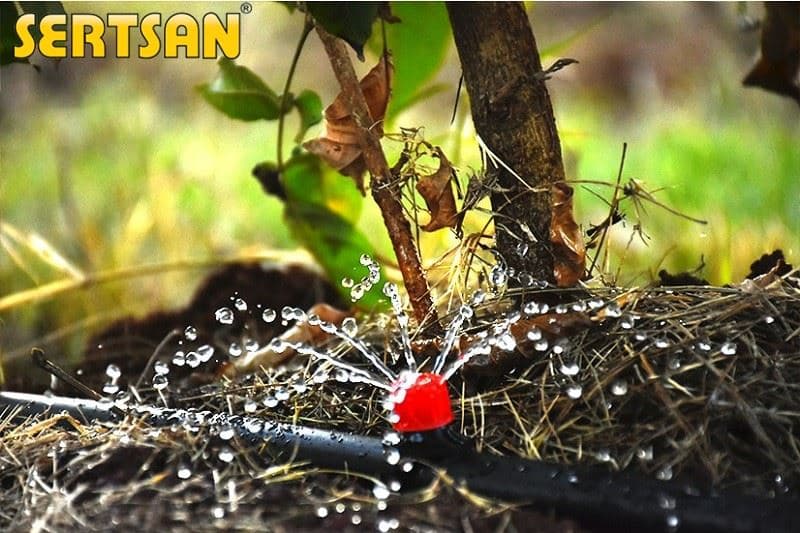
Due to today's water crisis, many farmers have turned to pressurized irrigation systems — drip irrigation above all — in order to benefit from the many advantages these systems offer.
However, to install a proper drip irrigation system, the requirements must be taken into account in order to achieve the highest efficiency from the system. In such a setup, the drippers — the heart of the drip irrigation system — play the leading role in water delivery.
When setting up an ideal drip irrigation system, three important questions arise:
Dripper type — which type of dripper is right for me?
Number of drippers — how many drippers are needed per plant?
Dripper spacing — what should the proper spacing between drippers be?
Having a comprehensive goal for answering these three questions and making the right decisions — ones that reduce costs and prevent the waste of resources — will help you harvest the best and highest-quality crop from your soil.
Before answering these questions, we need to consider two important factors:
Choosing the right pump
There are different types of irrigation pumps, each suited to a particular irrigation system. Two important factors influence pump selection. The first is the water pressure the pump generates; the other is the output flow rate, which should be selected taking into account the pressure and flow rate required by the irrigation system (the dripper type).
Irrigation water quality
Paying attention to the quality of the irrigation water is more important in drip irrigation than in other methods, because higher water quality reduces the likelihood of the drippers clogging. The compounds and salts found in some water sources cover a wide range of substances that can clog the water outlets of drippers and emitters. Factors that cause dissolved substances in the water to precipitate include water pressure, temperature, and high concentrations of dissolved substances. Depending on the source of the irrigation water, different soluble substances can contribute to sediment formation. For example, calcium, iron, and manganese each play a role in determining the level of acidity and alkalinity and, subsequently, the amount of precipitation.
In conclusion, the water quality should be checked before a drip irrigation system is implemented, so that, if necessary, an appropriate filtration system can be used to achieve the ideal quality. In systems with a large number of drippers, clearing blockages takes a great deal of time and can cause problems in irrigation planning.
Choosing the dripper type
Selecting the appropriate dripper is one of the important issues to address before starting with a drip irrigation system. Various factors influence the choice of the right dripper, and knowing them helps you increase the efficiency of your irrigation system.
PC drippers
Pressure-compensating (self-regulating) drippers are used to ensure pressure uniformity in the irrigation system. The conditions under which PC drippers are recommended are listed below:
Rugged terrain with large differences in elevation, such as hills or steep areas...
Fields where the pipes and laterals used are long.
Fields with a slope greater than 2%.
Highly sensitive crops that are vulnerable to water shortage or over-irrigation.
Fields where the uniform distribution of water is of great importance.
Adjustable drippers
Since the output flow rate of these drippers can be adjusted, they can be used when different trees and plants require different amounts of water.
Number of drippers
A drip irrigation system consists of various components, and among them the drippers hold particular importance compared to the other components. The most important factor in determining the appropriate number of drippers is the level of wetting the plant requires. For example, more drippers are needed to supply the water a tree requires than for a shrub. In general, a young plant is irrigated with fewer drippers, since it needs less wetting to deliver water to the roots, and as the plant grows and matures, the number of drippers is increased. Accordingly, the plant's growth and maturity stages must be taken into account at the very beginning of the irrigation system design. In general, for this purpose, the plant's water requirement at its different growth stages is considered as far as possible, and the system is designed and planned accordingly.
Dripper spacing
Another important factor affecting the spacing between drippers for a plant is the type of soil being cultivated. Water moves through the soil both horizontally and vertically. This movement is influenced by three forces: capillary force, water pressure, and gravity. The effects of these three forces differ in soils with different textures. For example, in light soils such as sandy soil, the horizontal movement of water is limited, and the movement is vertical and occurs at a higher speed. In heavy soils such as clay, horizontal movement is greater, but its speed is low. Accordingly, in sandy soils where the horizontal movement of water is limited, the drippers need to be closer together to increase the level of wetting. In clay soils, however, due to the horizontal movement of water across the soil surface, the drippers can be designed with greater spacing.
It is somewhat difficult for ordinary farmers to identify the type and texture of the soil without a soil test, and you cannot see the composition of clay or sand just by looking at the soil. Nevertheless, these constituents can be recognized to some extent from the soil's appearance. For example, clay soil usually cracks and splits as it dries. Another way to identify the soil is to take a handful of it and press it in your palm to form a ball; if it crumbles and does not hold together well, this indicates that the soil is sandy.
Once we know the soil's saturation and permeability, we can calculate the optimal spacing of the drippers. For example, if we know that the speed of water movement in the soil is 525 mm, we can multiply this by 1.9 to obtain the optimal dripper spacing. The reason we use 1.9 instead of 2 is to create a small amount of overlap between two drippers. In the previous example, the optimum spacing between two drippers is 1 meter. If we have not tested the degree of saturation and the water movement, we can determine this spacing empirically based on the soil type.
Dripper spacing in different soils (4 liters/hour)
Light soil (sandy)
60 cm
Medium soil
100 cm
Heavy soil (clay)
130 cm
Since the plant's water requirement increases at different growth stages, the question may come to mind: why not use a dripper with a higher flow rate?
The answer to this question lies in knowing that not all plant roots absorb water. The depth of the water-absorbing roots differs among trees in different regions. For example, in desert trees these roots reach depths of up to 50 meters, whereas in orchard trees they spread only within the tree's shaded area. The shaded area is the circular zone extending along the tree's branches. Therefore, to irrigate trees properly, our efforts will focus on the shaded area. As a result, increasing the dripper's flow rate does not increase the wetting rate of the plant's roots; the excess water simply sinks into the depths of the soil and is of no use to the plant. In general, taking the depth of the plant's roots into account at each stage of growth and determining the appropriate irrigation duration helps optimize irrigation and prevents water waste.
Two points to keep in mind when using a drip irrigation system:
The optimal duration for irrigating the soil with a dripper is considered to be 1.5 to 2 hours, due to the leaching of soil minerals.
So that the plant does not experience water stress, irrigation intervals generally do not exceed three days.