
February 16, 2023
Salinity and Agricultural Irrigation
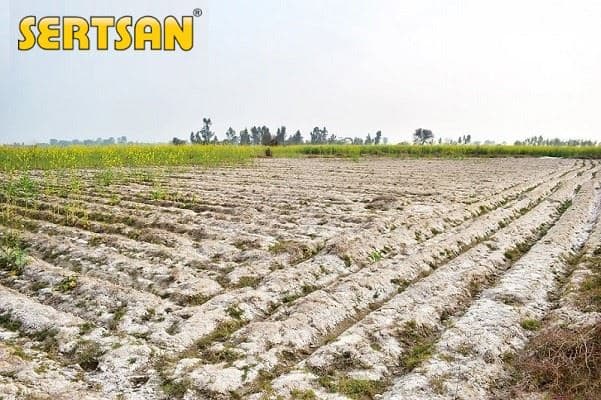
Salinity is an increase in the amount of salt present in the soil. Salinity can result from factors such as the quality of the irrigation water, the salt content of the soil, and the climate. Salinity can hinder the growth and development of plants and cause yield losses.
Salinity is a major problem for agriculture. It is widespread in the regions that contain the world's most fertile soils. Salinity can result from poor irrigation water quality. The salt contained in irrigation water accumulates in the soil and hinders plant growth. Salinity can also result from a high salt content in the soil. When the soil's salt content is high, plant roots cannot absorb water, which leaves the plants suffering from water deprivation.
Salinity can also be affected by the climate. In arid climates, the water in the soil evaporates and the salt remains in the soil. This causes the soil's salt content to increase. Salinity hinders the growth and development of plants and causes yield losses.
Certain measures can be taken to prevent salinity from hindering the growth and development of plants. These measures may include improving the quality of the irrigation water, reducing the salt content of the soil, and managing the effects of the climate.
The quality of the irrigation water is an important factor in salinity. To improve the quality of the irrigation water, its salt content can be reduced. The salt content of irrigation water can be lowered by filtering or softening the water.
The salt content of the soil is an important factor in salinity. To reduce the salt content of the soil, the salts present in the soil can be leached out. Leaching the salts from the soil can be achieved by applying irrigation water in excess of the soil's needs.
Climate is an important factor in salinity. In arid climates, the water in the soil evaporates and the salt remains in the soil. This causes the soil's salt content to increase. In arid climates, irrigation must be carried out to meet the plants' water needs. Irrigation prevents the salt content of the soil from increasing.
Salinity is a serious problem that hinders the growth and development of plants. Salinity can result from poor irrigation water quality, a high salt content in the soil, and the climate. Certain measures can be taken to prevent salinity from hindering the growth and development of plants. These measures may include improving the quality of the irrigation water, reducing the salt content of the soil, and managing the effects of the climate.
Below are some figures on salinity and agriculture:
- The area of saline soils in the world is approximately 2 billion hectares.
- Saline soils are widespread in the regions that contain the world's most fertile soils.
- Saline soils are a major problem for agriculture and can cause yield losses.
- Salinity can result from poor irrigation water quality, a high salt content in the soil, and the climate.
- Certain measures can be taken to prevent salinity from hindering the growth and development of plants.
- These measures may include improving the quality of the irrigation water, reducing the salt content of the soil, and managing the effects of the climate.
Salt-tolerant plants can live in saline soils and saline waters. Because these plants are resistant to the adverse effects of salt water, they are at an advantage over other plants growing in saline soils and saline waters.
Some salt-tolerant plants include:
- Aloe vera
- Agave
- Bamboo
- Pine
- Paddy rice
- Bay laurel
- Fern
- Hazelnut
- Blue fenugreek
- Linden
- Fig
- Asparagus
- Tulip
- Maize
- Eucalyptus
- Palm
- Rice
- Siberian elm
- Garlic
- Onion
- Sumac
- Olive
Salt-tolerant plants can be grown in saline soils and saline waters. Because these plants are resistant to the adverse effects of salt water, they are at an advantage over other plants growing in saline soils and saline waters.
Some measures that can be taken to prevent salinity include:
- Improving irrigation water quality: Methods such as filtering or softening the irrigation water can be used to reduce its salt content.
- Reducing the salt content of the soil: To reduce the soil's salt content, the salts present in the soil can be leached out. This can be done by draining excess irrigation water through the soil.
- Managing the climate: In arid climates, irrigation must be carried out to meet the plants' water needs. This will prevent the salt content of the soil from increasing.
- Selecting salt-tolerant plants: Salinity affects some plants more than others. Selecting salt-tolerant plants will reduce yield losses caused by salinity.
The measures that can be taken to prevent salinity will vary depending on the severity and source of the salinity problem. In cases where the salinity problem is severe, professional assistance may be required.
Drip irrigation is the delivery of irrigation water directly to the roots of plants. This method saves water and reduces salt accumulation in the soil.
Drip irrigation is an ideal irrigation method for areas with salinity problems. By delivering the irrigation water directly to the plants' roots, drip irrigation prevents the water from evaporating at the soil surface. This reduces salt accumulation in the soil and enables the plants to grow better.
Drip irrigation offers many advantages for irrigation in areas with salinity problems. These advantages are as follows:
- Water savings: Drip irrigation saves between 50% and 70% of irrigation water.
- Reduces salt accumulation in the soil: Drip irrigation prevents water from evaporating at the soil surface and therefore reduces salt accumulation in the soil.
- Enables better plant growth: Drip irrigation enables plants to grow better and achieve higher yields.
Drip irrigation is an ideal irrigation method for areas with salinity problems. Drip irrigation saves water and, by reducing salt accumulation in the soil, enables plants to grow better.
Plants have developed special adaptations to cope with salt water. These adaptations enable the plants to absorb and tolerate salt water.
Some adaptations of salt-tolerant plants include:
- Regulating salt concentration to reduce it in the roots: The roots of salt-tolerant plants contain special enzymes that regulate salt concentration. These enzymes prevent salts from entering the cells and ensure that salts are expelled from them.
- Storing water to reduce salt concentration: The leaves of salt-tolerant plants contain special tissues for storing water. These tissues retain water within the plant and reduce the salt concentration.
- Shedding leaves to reduce salt concentration: Salt-tolerant plants have the ability to shed their leaves under excessive salt concentrations. This reduces the plants' salt concentration and enables them to survive.
Salt-tolerant plants can live in saline soils and saline waters. Because these plants are resistant to the adverse effects of salt water, they are at an advantage over other plants growing in saline soils and saline waters.